
You searched for something on Google recently. You got an answer. You did not click a single link. You just read what Google wrote for you and moved on.
That moment, which probably felt completely normal to you as a user, is quietly devastating to every business, publisher, and SEO professional who built their digital presence around earning that click. And at Google I/O on May 19, 2026, Google made it official: this is not a temporary experiment. This is the new direction, and it is accelerating.
Google announced what it called the biggest transformation to Search in over 25 years. The familiar search box is being rebuilt from scratch. AI agents will soon browse the web on your behalf. Search results are morphing into interactive, AI-generated experiences. And the ten blue links that defined how we found information on the internet are, for all practical purposes, on their way out.
If you run a business, manage a brand’s online presence, or work with a digital marketing agency to drive organic traffic, this update affects you directly. This blog covers every new feature Google announced, the real data behind the traffic shift already underway, and the practical steps you can take right now to stay visible in this new search environment.
Background: How Google Search Got Here
The changes announced at I/O 2026 did not come out of nowhere. Over the past two years, Google has been steadily layering AI into its search experience. First came AI Overviews, the short AI-generated summaries that began appearing above organic results, answering queries before a user ever reaches a website. Then came AI Mode, a conversational search tab that replaced keyword queries with back-and-forth exchanges.
The adoption numbers Google shared at I/O 2026 tell you everything you need to know about how fast this has moved. According to the official Google Blog post “A New Era for AI Search“, AI Mode surpassed one billion monthly users, with queries more than doubling every quarter since launch. AI Overviews, meanwhile, now reach more than 2.5 billion monthly users. For context, ChatGPT sits at around 900 million weekly active users, meaning Google’s AI features have reached a far larger total monthly audience.
What I/O 2026 announced is not a reset. It is the next phase of a transformation that has been reshaping search for two years already. The difference now is that the pace is faster and the features are significantly more consequential.
All the New Google Search Features Announced at I/O 2026
Google unveiled multiple significant changes to Search at I/O 2026. Here is a breakdown of each feature, what it does, and when it arrives.
The Redesigned Search Box, Now Called “Ask Google”
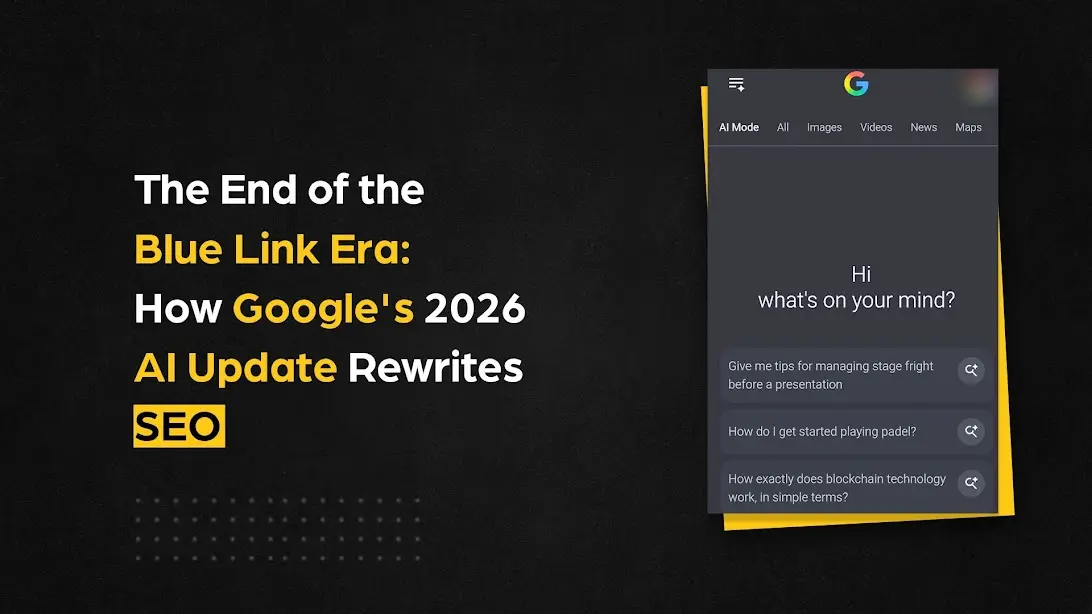
The most immediately visible change is the search box itself. Google describes this as “the biggest upgrade to our Search box in over 25 years.” It has been rebuilt from the ground up into what it calls an intelligent Search box, now renamed “Ask Google.”
Key changes to the new search box:
The box expands dynamically to give users space to describe exactly what they need, moving beyond short keyword queries to full, natural-language questions.
It accepts multimodal inputs, meaning users can search using text, images, files, videos, and even open Chrome tabs as part of the same query.
It introduces AI-powered query suggestions that go beyond standard autocomplete, helping users formulate better, more specific questions before they even search.
The interface slides seamlessly between traditional results, AI Overviews, and full AI Mode conversations, all without leaving the page.
The new Search box began rolling out the week of May 19, 2026, in all countries and languages where AI Mode is already available. It is free for all users.
AI Overviews Now Connect Directly to AI Mode
Previously, AI Overviews and AI Mode were somewhat separate experiences. Google has now merged them. Now, because of this, users can ask a follow-up question directly from an AI Overview, which flows naturally into a conversational back-and-forth with AI Mode. Context carries over between turns, and, as the conversation deepens, the supporting links and articles become more relevant.
This matters enormously for anyone tracking organic traffic. Journalist Sarah Perez, writing for TechCrunch (“Google Search as you know it is over”), cited SEO analyst Lily Haynes, who captured the practical effect clearly: “A lot of SEOs were concerned that Google might announce at Google I/O that AI Mode is becoming the default, and this is not the case, but boy are we getting close to that. I didn’t have to click on any of these websites.” That observation is not an edge case. It is increasingly the everyday experience.
Gemini 3.5 Flash as the Default AI Model in Search
Google confirmed that Gemini 3.5 Flash is now the default model powering AI Mode globally, effective May 19, 2026. The blog describes it as Google’s “newest Flash model delivering sustained frontier performance for agents and coding.” A smarter, faster model raises the bar for the content it chooses to cite. Vague or generic content becomes even less likely to be surfaced, while specific, well-structured, and genuinely authoritative content becomes more valuable.
Information Agents: AI That Monitors the Web on Your Behalf
This is the most structurally significant announcement from I/O 2026. According to the official Google post, Google is introducing “search agents,” a new category of persistent autonomous agents that run inside Search continuously, monitoring the web without requiring a new query from the user each time.
The official blog describes how information agents work: “Operating in the background, 24/7, these agents intelligently reason across information to find exactly what you need at exactly the right moment.” Liz Reid wrote that agents will “look across everything on the web, like blogs, news sites, and social posts, plus our freshest data, such as real-time info on finance, shopping, and sports, to monitor for changes related to your specific question.” Users then receive “an intelligent, synthesized update, with the ability to take action.”
The official blog gives concrete examples: apartment hunters can describe their exact requirements, and an agent will continuously scan listings, sending a notification when something matches. Sports fans can set an agent to alert them the instant a favorite athlete announces a product release. Think of it as a far more intelligent evolution of Google Alerts, delivering synthesized, actionable updates rather than raw links.
Information agents will launch first for Google AI Pro and Ultra subscribers this summer.
Generative UI: Search Results Built Dynamically for Each Query
Google is introducing what it calls “generative UI” for Search, powered by Gemini 3.5 Flash and Google Antigravity, the company’s new agentic development platform. The system generates custom layouts, interactive visuals, and simulations in real time, specifically tailored to each individual question.
As Liz Reid mentioned, Search can now “build the ideal response in the right format for your question completely on the fly,” assembling components like “interactive visuals, tables, graphs, or simulations in real-time.” A practical example she gave: ask about astrophysics, and Search might generate a live simulation. Ask a follow-up, and it updates accordingly. This capability will be available for everyone in Search this summer, free of charge.
Mini Apps Built Directly Inside Search
Beyond one-off answers, Google is introducing the ability to build persistent “mini apps” directly within Search using natural-language instructions. As described in the official announcement, these go beyond answering a single question. The example Liz Reid gives is a custom fitness tracker built by simply describing what you need. Search codes it,
pulls in real-time sources including live maps and local weather data, and produces a tracker users can return to and update week after week.
This feature launches first for Google AI Pro and Ultra subscribers in the US this summer, with wider availability to follow.
Expanded Agentic Booking and In-Search Transactions
Google is also expanding agentic booking capabilities in Search to a wide range of new tasks, including local experiences and services. Additionally, users can share specific criteria, such as finding a private karaoke room for six on a Friday night that serves food late, and Search will pull together pricing and availability with direct links to complete the booking. For select categories like home repair, beauty, or pet care, Google can even call businesses on the user’s behalf. These capabilities will roll out to everyone in the US this summer.
The Traffic Data: What Is Already Happening to Organic Search
The I/O announcements describe the future. But the traffic impact of AI Overviews and AI Mode is already measurable today, and the numbers matter for anyone investing in SEO services or building an organic search strategy.
- AI Overviews now appear on 48% of all Google queries, up from 34.5% in December 2025, a 58% increase in three months, according to Ahrefs.
- When an AI Overview appears, the position-one organic result loses approximately 18% of its clicks compared to a standard results page.
- Position-one click-through rates on queries with AI features have dropped from 27% to as low as 11%, based on SISTRIX data.
- Zero-click searches now account for 58.5% of all US Google searches, according to SparkToro and Datos.
- However, sites cited inside an AI Overview receive around 35% more organic clicks than they would from a standard position-one result below the overview. Being cited in the AI answer is now more valuable than ranking below it.
That final point reframes the entire SEO objective. The goal is no longer simply appearing on page one. It is the source that gets cited inside the AI answer. That requires a fundamentally different approach to content strategy.
What This Means for SEO: An Assessment
Traditional SEO, built primarily around keyword targeting and informational content that AI can now answer directly, is under measurable pressure. If your Google Search Console is showing impressions rising while clicks and click-through rates fall, you are already seeing this in your own data.
That said, Google itself confirmed, and this is important, that no additional SEO requirements exist for AI Overviews and AI Mode beyond existing foundational practices. What has changed is the standard. The bar for what qualifies as genuinely useful, authoritative content has been raised considerably.
How the New Query Suggestion System Changes Keyword Strategy
The new AI-powered suggestion system actively prompts users toward longer, more specific queries. Short-term keywords will progressively lose weight in Search Console data, replaced by longer, intent-driven phrases. For any company providing digital marketing services and building content strategies, this reinforces the case for targeting real user questions over high-volume generic terms.
Information Agents Change How Content Gets Consumed
When autonomous agents start regularly browsing the web on users’ behalf, your content will be read more often than it is clicked on. Traffic volume becomes a less complete picture of your content’s reach. The more important measure becomes whether your content is trusted and cited by AI systems, which places a premium on quality and specificity over sheer publishing volume.
How to Appear in Google’s AI Search: Practical Steps That Work
Whether you manage your own website or work with a digital marketing company, the following actions are grounded in what Google has confirmed, what the data shows, and what the shift toward AI-driven search actually rewards.
1. Optimize for Citability, Not Just Rankings
Being cited inside an AI Overview now delivers more value than ranking below one. To earn that citation, your content needs to take clear positions and state specific, citable claims rather than describing topics in general terms.
- Audit your most important pages and ask whether each one contains a clear, standalone claim or position that stands on its own.
- Back assertions with data, case studies, or links to verifiable sources.
- Remove content that reads as interchangeable with anything else on the topic. Generic phrasing is the fastest route to invisibility in an AI-driven search environment.
2. Strengthen E-E-A-T Signals Across Your Website
Experience, Expertise, Authoritativeness, and Trustworthiness have always mattered to Google. With Gemini 3.5 Flash powering AI Mode, the model is significantly better at telling the difference between genuine expertise and content that merely sounds authoritative. Every business and digital marketing agency investing in content needs to make E-E-A-T tangible, not just implied.
- Attribute content to real authors with verifiable credentials and visible author profiles.
- Earn mentions and citations from recognized sources in your industry.
- Make trust signals like testimonials, certifications, and verifiable track records easy to find.
3. Publish Content That AI Cannot Produce on Its Own
AI is highly capable of synthesizing information that exists broadly across the web. It cannot replicate proprietary data, original research, specific client results, or perspectives that come from genuine field experience. For digital marketing solutions providers, especially, real campaign outcomes, firsthand case studies, and data from your own work are your strongest competitive advantage in an AI search environment.
4. Ensure Your Content Is Technically Accessible to AI
For your content to be reliably read and cited by AI systems, it must be technically clean and machine-readable.
- Use clear heading structures (H1, H2, H3) that accurately reflect the hierarchy of your content.
- Implement structured data and schema markup wherever applicable.
- Ensure page speed and Core Web Vitals are in good standing. These remain quality signals.
- Verify that AI crawlers are not inadvertently blocked in your robots.txt file.
5. Invest in Local SEO and Google Business Profile
Google specifically highlights that local visibility through Google Business Profile and Merchant Center can influence visibility in AI-powered answers. For any business, including those working with a digital marketing company in Chandigarh or operating in any regional market, a well-maintained Google Business Profile is no longer just a local SEO tactic. It is a signal that feeds into AI-driven search results. Keep it updated with accurate details, fresh photos, active review responses, and current service information.
6. Build Content Freshness Into Your Editorial Process
Information agents will continuously monitor the web and surface the most current, relevant material. Outdated content will progressively lose ground to fresher sources. Any digital marketing agency or in-house content team should build structured update cycles into their workflow, reviewing top-performing pages regularly to refresh data, examples, and time-sensitive details.
7. Extend Your Strategy to Include Answer Engine Optimization
Answer Engine Optimization, or AEO, means optimizing content to be selected as the answer rather than merely a result. It is now a practical necessity. Google’s own documentation confirms that AEO and Generative Engine Optimization (GEO) are not separate disciplines from foundational SEO. They are natural extensions of it. Strong foundational SEO combined with content that only your team can produce is what earns visibility across all AI surfaces. Any SEO services provider working with clients in 2026 should already be building this into their strategy.
The Broader Impact on Publishers, Businesses, and Website Traffic
As TechCrunch reported (“Google Search as you know it is over“), the changes announced at I/O 2026 will likely further reduce referral traffic from Search to publishers and websites. Some ad-dependent media businesses have already shut down due to declining clicks from AI Overviews. As generative UI and information agents arrive this summer, that pressure will increase before it stabilizes.
The window for adjustment is short. The new search box is already live. Generative UI arrives this summer. Information agents roll out this summer for Pro and Ultra subscribers first.
Sundar Pichai addressed Google’s broader direction in his I/O 2026 keynote blog post, writing about Google’s commitment to making frontier AI broadly accessible. That means the features announced for premium subscribers are not staying there permanently. They are coming to the general user base, which is the vast majority of your potential audience.
Rollout Timeline: When Each Feature Arrives
- Redesigned “Ask Google” Search box: Rolling out now, from May 19, 2026. Free for all users in all countries where AI Mode is available.
- AI Overviews with direct AI Mode follow-up: Live globally from May 19, 2026.
- Generative UI for Search: Summer 2026. Free for all users.
- Information agents and mini-app building: Summer 2026, initially for Google AI Pro and Ultra subscribers in the US.
- May 2026 Core Update: Began rolling out May 21, 2026. The second core update of 2026 and the fourth confirmed ranking update of the year.
Where This Leaves Your Business
Google Search has always evolved. But this particular shift is different in both scale and speed. The move from a link-based discovery tool to an AI-driven answer and action engine changes the fundamental relationship between users and the web. Users will get more of what they need without leaving Google. That is genuinely useful for them, and it raises the bar significantly for any business that has relied on organic search traffic to grow.
What Google is still rewarding, and this has not changed, is genuine expertise, real authority, and content that serves users better than anything else available on the topic. The difference now is that generic, undifferentiated content has very little room to hide. Businesses that produce original, trustworthy, and specifically useful content are better positioned than they might realize.
For businesses in any market, including those working with digital marketing services in Chandigarh or anywhere else, the right response to this update is not to wait and observe. It is to audit where your content stands today, identify what makes your expertise genuinely irreplaceable, and work with partners who understand where search is heading.
The search experience your customers will use in six months looks very different from the one they used six months ago. The businesses that close that gap quickly are the ones that will hold their visibility through this transition.
Further Reads |
Need Help Adapting Your SEO Strategy for AI Search?
Our team at 42Works specializes in building search strategies that work in the AI era, from content authority and technical optimization to local SEO and digital marketing solutions that drive real results. Get in touch to discuss where your brand stands and what needs to change.
FAQs
Is Google stealing my content to train its AI?
Technically, yes. Google’s crawlers read your site to generate answers. You may still be cited as a source, but users often get the information directly from the AI response without visiting your website. Some publishers describe this as “theft without compensation.”
Will paying for Google AI Pro get my site cited more often?
No. Google has confirmed that paid subscriptions do not influence citations or search rankings. However, new features such as agents and mini-apps are typically released first to Pro and Ultra users, meaning your content may be surfaced to those users sooner.
Can I opt out of having my content used in AI Overviews?
You can block AI crawlers through robots.txt, but doing so may also prevent your content from appearing in search results. Currently, there is no option that allows your content to appear in search while preventing it from being summarized by AI.
Does having a YouTube channel help with AI Search visibility?
Yes. Google’s AI can use and cite information from video transcripts. Well-optimized YouTube videos that answer specific questions can appear as sources alongside traditional web pages.
Will backlinks still matter in 2027?
Yes, but their role is evolving. Backlinks are becoming more important as authority signals rather than direct ranking factors. A single link from a trusted expert source can carry more value than dozens of low-quality directory links.
How do “mini apps” inside search affect my business?
If Google introduces a mini-app for your industry, users may complete tasks directly within Search without visiting external websites. Businesses may need to create their own tools or become trusted data sources that these experiences reference.
Is Bing or Perplexity doing the same thing as Google?
Yes, and in some cases even more aggressively. Bing’s AI experiences often result in lower click-through rates, while Perplexity generally provides better source attribution but has a much smaller user base. Google’s changes are the most significant because it dominates the search market.
What happens to my old blog posts from 2020?
Older content can lose visibility over time, especially if the information becomes outdated. Refreshing statistics, examples, and insights can help older articles regain relevance and visibility in AI-driven search experiences.
Does Google’s AI favor big brands over small ones?
Both large and small websites have opportunities. Established brands benefit from existing authority, but smaller publishers with unique research, original data, local surveys, or niche expertise can often earn citations more effectively than generic content from larger companies.
Should I move my content behind a paywall to protect it?
Generally, no. Paywalled content is more difficult for AI systems and search engines to access, which can reduce visibility and citations. In the AI era, discoverable and citable content often performs better than content hidden behind a paywall.
How do I track if my content is being cited in AI answers?
Google Search Console does not currently provide AI citation reporting. SEO platforms such as Semrush, Ahrefs, and SISTRIX have introduced AI visibility and citation tracking features. You can also manually search your target keywords and check whether your brand appears in AI-generated responses.
Will Google ever pay publishers for using their content in AI answers?
There are currently no official plans to do so. While discussions around compensating publishers have surfaced in the past, Google’s present position is that attribution and citations are the primary form of value exchange.
What’s one thing that works better now than before this update?
Long-form, opinionated case studies supported by original data. AI systems often prefer citing a single authoritative source with unique insights rather than generic roundup articles. Strong perspectives backed by evidence tend to perform particularly well.
I run an e-commerce store. Am I affected?
Generally, fewer than publishers. Product searches still feature images, prices, reviews, and links. However, as Google expands features that can book services or contact businesses directly, some customer interactions may happen without users visiting your website.
How do I contact 42Works for a custom AI-era SEO audit?
To assess your website’s readiness for AI search, citations, and zero-click visibility, contact 42Works at contact@42works.net or call +91-9517770042. Our team can evaluate your site and recommend strategies for the AI-driven search landscape.