
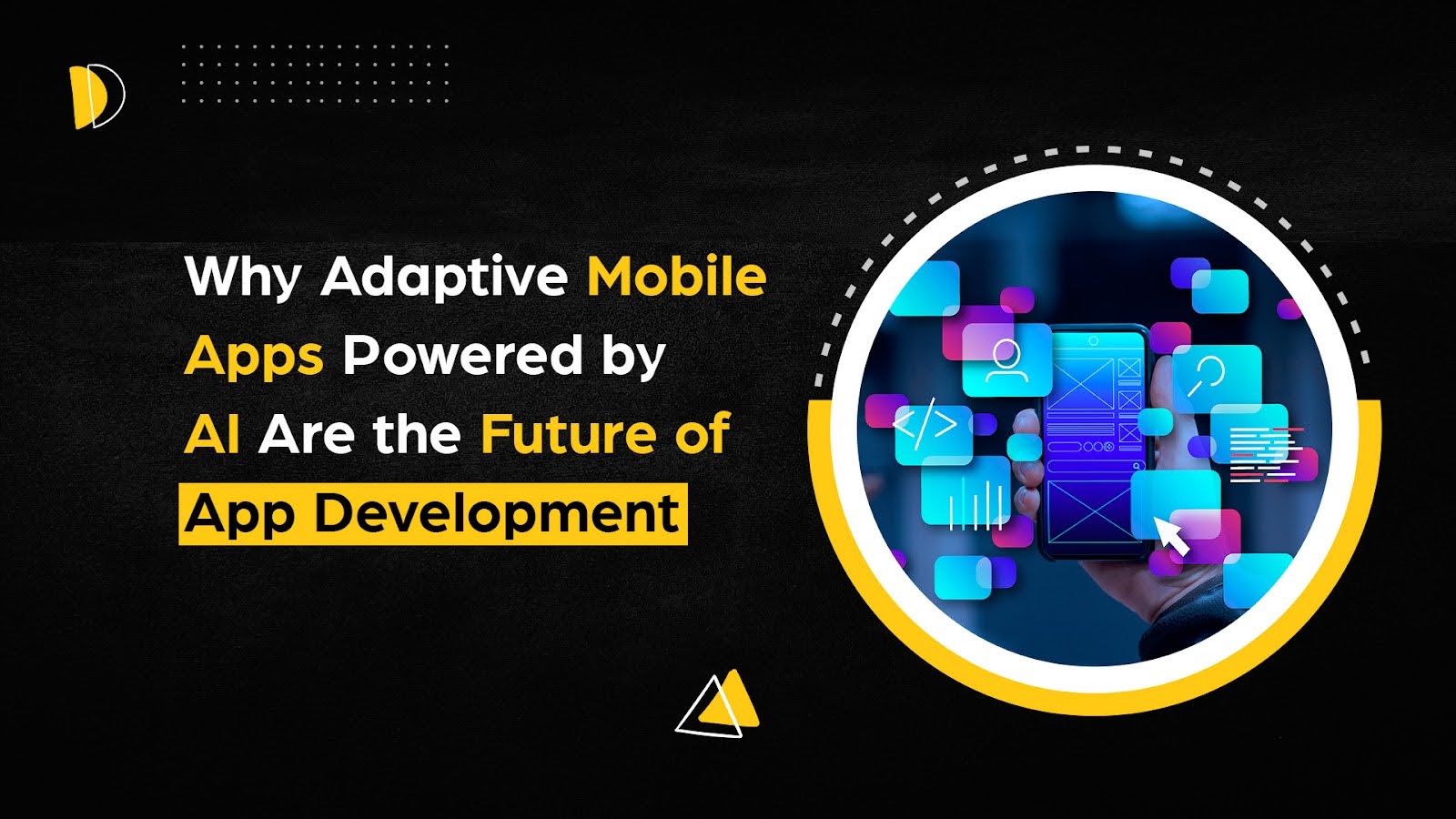
Your phone is no longer merely a device that you have in your pocket. It is, all at once, a companion, a business tool, and a personal assistant, a transformation powered in large part by modern mobile app development services. And the apps driving this change? Every day, they are getting more clever.
The integration of AI in mobile apps is changing the game for user expectations and business deliverables. Without the ability for your app to learn, adapt, and personalize on a per-user level in real time, you’re already behind. The future of app development belongs to adaptive, intelligent experiences, and we are only at the beginning of this shift.
Contact Us to Build Your AI-Powered App
Let us start by addressing the key question: what actually makes an app “adaptive” and “AI-powered,” and why does that distinction matter?
What Exactly Is an Adaptive AI-Powered Mobile App?
Not every app with a chatbot qualifies as a true AI-powered mobile app. Adaptive AI apps use machine learning, natural language processing, and behavioral analytics to change how they function based on who is using them and how. This section unpacks what that really looks like in practice and why it changes everything for users and businesses alike.
Defining Adaptive AI Apps Beyond the Buzzword
Adaptive AI apps observe how users act when they are using the product, infer intent from that behavior, and adjust their interface or functionality to suit. Studio song lyrics vary until an artist settles on a final version. Here is what sets them apart:
- They make use of device machine learning to make decisions locally without the need to constantly talk to a server, providing faster and more private experiences.
- They tailor content feeds, which products to show, and how the UI looks based on consumption patterns specific to users.
- They sense changes in context, such as location or time of day, and even device orientation, and respond.
- They get better over time as they learn continuously from aggregated and anonymized user signals.
- They create natural language interfaces that understand conversational context rather than single keywords.
Core Technologies Behind Adaptive AI Apps
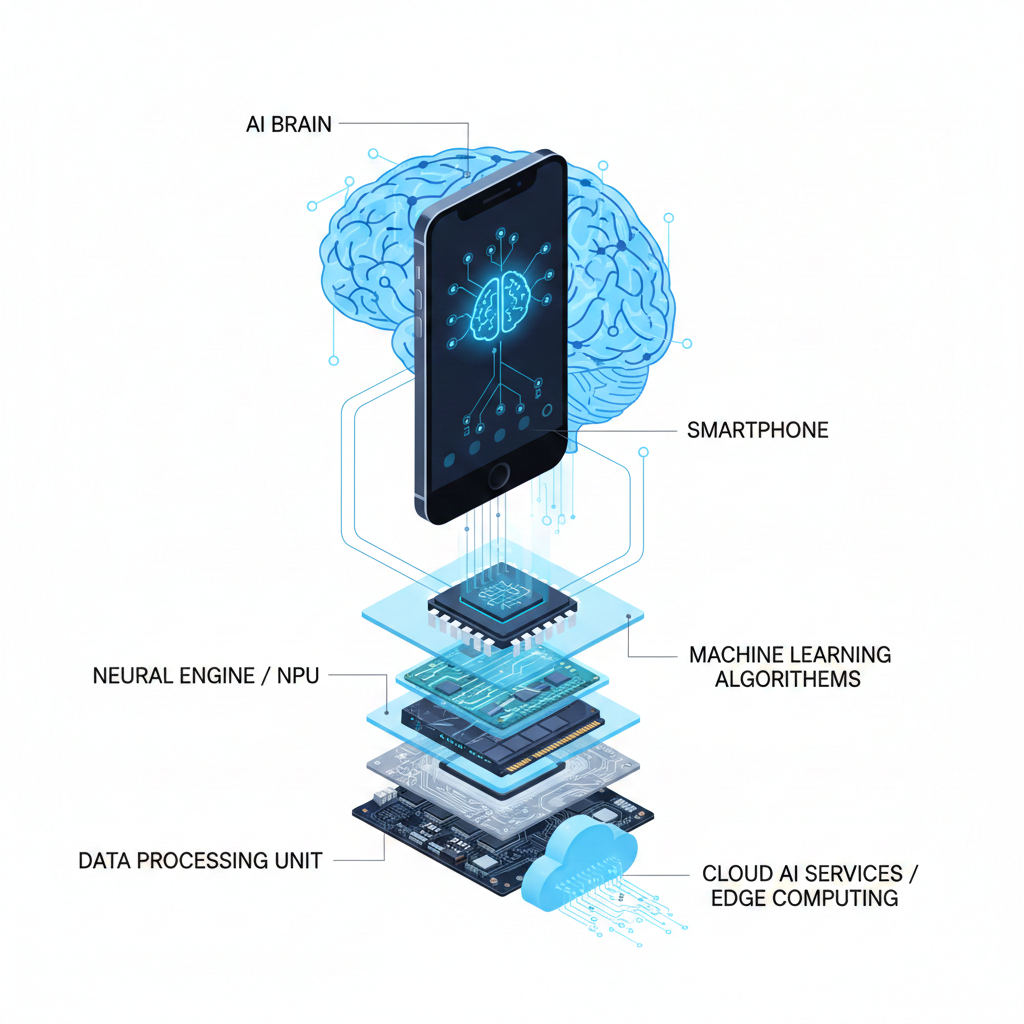
The knowledge of the technology stack allows businesses to select a custom mobile application development company based on the correct criteria. The essential components are:
- TensorFlow Lite (now LiteRT) and Core ML for facilitating on-device inference, thus reducing latency with enhanced privacy of data.
- Federated Learning trains AI models on the device without exposing raw user data to the phone.
- Conversational interfaces and semantic search within apps using transformer-based NLP models.
- RLHF (Reinforcement Learning from Human Feedback), to refine recommendation engines in a stepwise manner.
- Edge AI chips, such as Apple Neural Engine and Qualcomm Hexagon DSP, facilitate real-time AI processing without draining the battery.
Why This Matters When Evaluating Mobile App Development Solutions
If you are scrutinizing mobile app development services in India or all over the world, knowing these technologies allows you to ask the right questions. A knowledgeable customer always receives a superior product. Every one of those capabilities translates into a measurable competitive advantage.
Reference: Google AI Blog: Federated Learning Collaborative Machine Learning
Now that we know what these apps are, let us talk about why they are winning in the market right now.
The Business Case for AI Integration in Mobile Apps
AI integration in mobile apps is no longer an experiment. It is a revenue strategy. From reducing churn to increasing average session time, the business impact is hard to ignore. This section covers the real benefits and why brands are prioritizing AI-powered mobile app development over conventional solutions.
How AI Is Directly Impacting Mobile App ROI
Here is what industry data and patterns are consistently showing:
- Apps with AI-driven personalization see user retention improvements of 30 to 50 percent compared to static apps, as reported across multiple industry studies.
- The right product or content served to the right user at the optimal moment creates in-app conversion, and AI can enable this.
- Ai-Powered predictive maintenance in apps also reduces crash-related churn, enabling users to stay engaged 15% longer.
- Customer support costs drop when AI chatbots handle first-tier queries inside the app itself.
- Thanks to fraud detection driven by AI in fintech apps, service providers can not only avoid any financial losses but also spark user trust.
Industry Verticals Seeing the Biggest Gains From AI Apps
The influence of AI mobile app development is equally not at all less. The leading industries in this development are:
- Healthcare: Apps that help diagnose symptoms, confirm whether drugs are being used correctly, or provide telehealth services.
- Retail and eCommerce: Personalized shopping feeds, visual search, and AI-based sizing recommendations.
- EdTech: Adaptive learning paths, changing the level of difficulty and format of content according to real data about students.
- Fintech: Instantaneous credit scoring, AI-enabled budget tools, and smart fraud alerts.
- Wellness and Fitness: Apps that offer dynamic workout and nutrition plans through biometric data integrated with wearables.
Comparing Traditional vs. AI-Powered vs. Adaptive AI Apps
The table below makes the differences across app types clear at a glance:
| Feature | Traditional App | AI-Powered App | Adaptive AI App |
|---|---|---|---|
| Personalization | None | Rule-based | Real-time, predictive |
| UX Adaptation | Static | Limited | Context-aware, dynamic |
| Data Processing | Manual/batch | Automated | On-device + cloud hybrid |
| Learning Ability | None | Pre-trained only | Continuous on-device ML |
| Dev Cost | Low–Medium | Medium | Medium–High (faster ROI) |
| Scalability | Limited | Good | Excellent, self-optimizing |
Reference: McKinsey: The State of AI 2024
Related Read: 9 Ways Mobile App Development Can Boost Your Business
The way you build these apps matters as much as what you build. Let us talk about the development approach.
How Hybrid Mobile App Development Services Are Powering the AI Revolution
Hybrid mobile app development services have become the go-to foundation for most AI-powered apps today. Building two fully separate native apps for iOS and Android while integrating heavyweight AI features is expensive and slow. Hybrid and cross-platform frameworks are changing that equation fast.
Why Cross-Platform Frameworks Work So Well With AI Integration
Frameworks like Flutter, React Native, and Ionic have matured enormously. Paired with cloud-based AI APIs, they let teams ship intelligent apps faster without compromising performance:
- Shared codebases reduce development time by up to 40 percent, freeing budget to invest in AI model integration and UX quality.
- Cloud AI APIs from Google Vertex AI, AWS SageMaker, and Azure AI connect seamlessly with hybrid apps, adding powerful AI out of the box.
- Flutter now has robust ML integration libraries, making on-device inference practical without switching to a native stack.
- React Native allows smooth integration with native AI modules on both iOS and Android via its JavaScript bridge.
- Hybrid apps support over-the-air updates, meaning AI models and inference logic can be refreshed without full app store releases.
Choosing the Right Tech Stack for Your AI-Powered Hybrid App
When working with a custom mobile application development company, the right stack depends on your specific AI requirements. Here is practical guidance:
- Flutter is a good option for apps that need a rich, fully customizable UI combined with on-device ML through TensorFlow Lite (LiteRT).
- If your team is well-versed in JavaScript and requires rapid incorporation of API-dependent AI components, choose React Native.
- When native performance is non-negotiable, for example, with AI inference workloads, use Kotlin Multiplatform.
- And for live video analysis or other real-time AI features, a hybrid shell with native AI modules is a breakthrough over pure JavaScript architecture.
What to Ask Your Hybrid Mobile App Development Partner Before Signing
Before committing to any development partner, make sure they can discuss model versioning, on-device vs. cloud inference trade-offs, and how they approach AI feature testing in production. These conversations separate experienced teams from those who just talk about AI in sales pitches.
Reference: Flutter Official Docs: Integrating ML Kit
India has quietly become one of the most important players in global AI app development. Here is why that matters to you.
Why AI-Driven Mobile App Development Is Growing Fast
If you’ve been exploring top mobile app development companies lately, you’ve probably noticed how quickly AI has moved from being a “nice to have” to something many apps now rely on. Teams across the world are building stronger AI capabilities, helping businesses add smarter features directly into their mobile products, from personalization and automation to predictive insights.
What Sets Strong AI App Development Teams Apart in 2025
It’s no longer simply about speed or pricing.” Teams that are rising up today tend to share a handful of key characteristics:
- Industry-focused expertise: Leading studios often specialize in specific sectors such as healthcare, fintech, retail, or education, which helps to build AI features that solve real problems.
- Fast testing and iteration: The high-performing teams care about launching MVPs, learning from real user feedback, and iterating on AI models over time, rather than the pursuit of perfection.
- Hands-on experience with modern AI tools: Strong familiarity with frameworks like TensorFlow, PyTorch, and Hugging Face allows teams to move faster and build more reliable solutions.
- Smooth global collaboration: Distributed workflows and distributed communications help you work with a global audience across different regions and timeframes.
- Practical approach to model optimization: Fine-tuning AI models can be resource-heavy, so experienced teams focus on balancing performance with efficiency.
Why Choosing the Right Development Partner Matters
Finding the right development partner can be a game-changer as AI becomes more integrated into mobile apps. Compared to larger execution-only vendors, smaller execution teams offer a more personal collaboration, faster decision-making, and better ownership of the product.
42Works: Building AI-First Mobile Experiences
42 Works is a custom mobile application development company that helps start-ups and enterprises create Artificial Intelligence-based apps that are fit for the real world. This approach balances a thoughtful product strategy alongside strong engineering that aids teams in executing on AI ideas and delivering them as working, scalable solutions.
Let us get into the specific AI features that are actually moving the needle for apps right now in 2025 and heading into 2026.
AI Features That Are Reshaping the Future of App Development Right Now
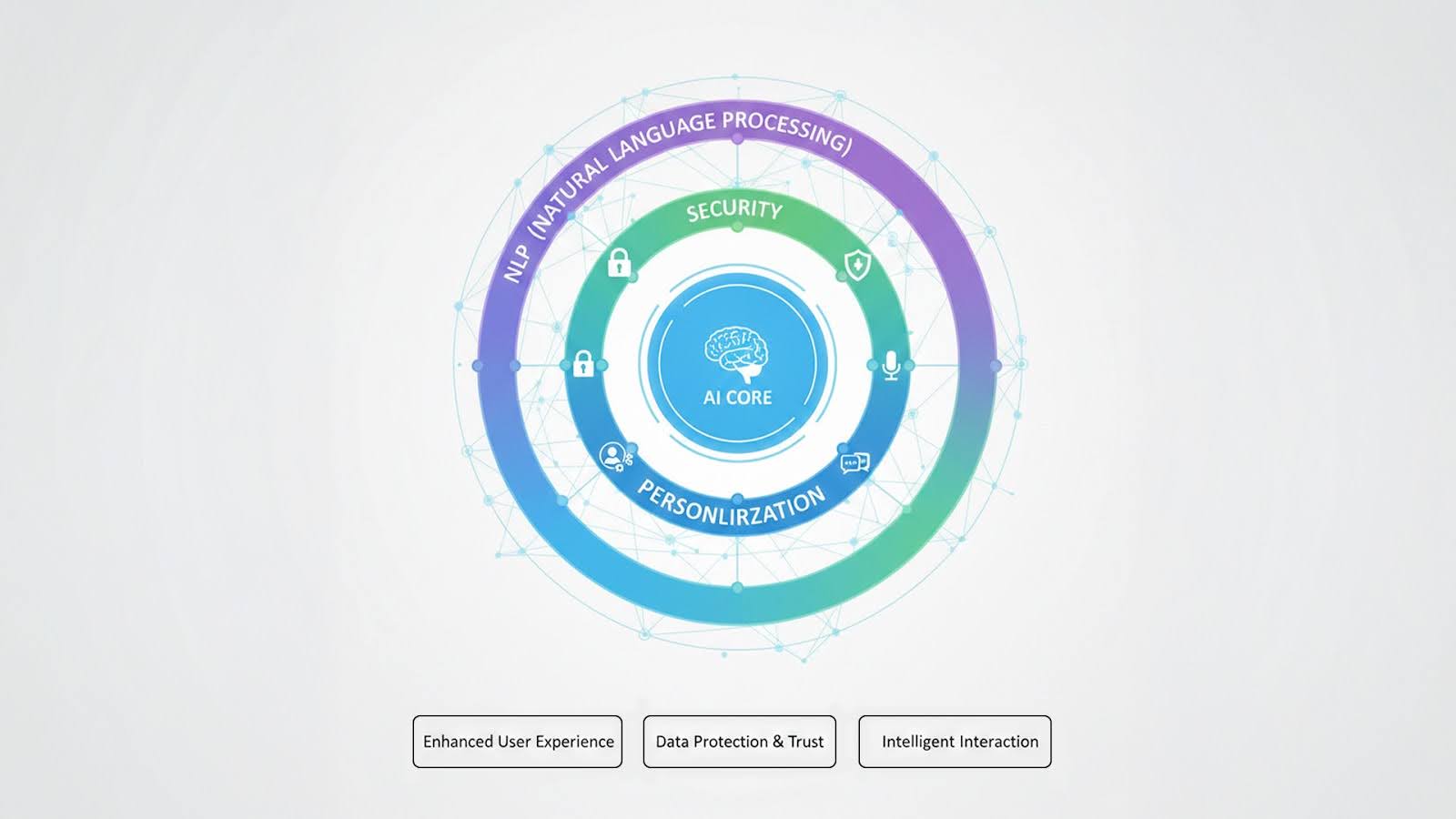
It turns out that the future of app development isn’t being driven by a handful of brilliant breakthroughs, but by lots and lots of these smart behaviors that, combined, make an app feel remarkably different to use. Here are the AI capabilities top development teams are prioritizing and that users are genuinely responding to.
High-Impact AI Features Changing User Behavior Inside Apps
These are not hypothetical. They are shipping production apps globally right now and driving measurable engagement lifts:
- Conversational AI interfaces: Beyond basic chatbots, apps now use large language model-powered assistants that understand multi-turn conversations, remember context within a session, and take actions inside the app itself.
- Multimodal input processing: Users interact with apps using voice, camera, and text simultaneously. AI processes all three in real time to understand and act on intent.
- Semantic search via AI: Breaking beyond keyword queries in apps so users can better and more instantly find what they’re looking for without needing to know exactly what to search for.
- Emotion and sentiment detection: Used in mental health, customer service, and education, voice/facial outcomes are analyzed to tailor content escalation (and timing) to a human.
- Predictive UX: Based on app activity, apps learn of the screens the user explores and make those pathways more visible or prevalent without needing manual adjustment.
AI-Driven App Security and Trust Features
Security is an area where AI is making apps not just smarter but meaningfully safer. Especially relevant for financial, healthcare, and enterprise apps:
- Biometric behavioral authentication: Continuous background verification using typing rhythm, scroll speed, and touch pressure patterns, completely invisible to the user during normal use.
- Real-time anomaly detection: AI flags unusual in-app behavior patterns that may indicate account compromise, well before the user notices anything wrong.
- AI-based app shielding: Dynamic code obfuscation and runtime protection that evolve as new attack vectors are identified.
- Privacy-preserving analytics: Differential privacy techniques that allow apps to learn from aggregate behavior without ever accessing individual user data directly.
AI Features That Will Define App Standards by 2027
Within two to three years, and based on current R&D roadmaps at Apple, Google, and Anthropic, we should expect spatial AI interfaces integrated with augmented reality, fully autonomous in-app agents that act independently of their users, and proactive AIs that perform actions for the user.
Reference: MIT Technology Review: Artificial Intelligence
Related Read: How Custom Mobile App Development Will Grow Your Business in 2026 and Beyond
Finally, let us talk about what all of this means if you are a business owner or product manager deciding whether to invest in AI app development now.
How to Choose the Right AI Mobile App Development Partner
Picking the right custom mobile application development company for an AI-powered product is different from hiring for a standard app build. The technical nuance is deeper, and the product decisions made in the first sprint can affect your AI system’s behavior for months or years. Here is a practical framework for making the right choice.
What to Evaluate When Selecting an AI-First Mobile App Partner
Not every studio calling itself an AI app development company has the depth to back it up. Here is how to evaluate them honestly:
- Ask for case studies where AI features were measured post-launch, not just built. Anyone can claim they integrated AI. Few can show retention lift or engagement data to prove it actually worked.
- Probe their data strategy. A great AI app without a smart data collection and governance plan is a problem waiting to happen. Your partner should have strong opinions about data pipelines from day one.
- Evaluate their model update workflow. With user behavior being dynamic over time, AI models can become stale. Inquire about their plan on retraining and redeploying the models after they are launched.
- Check their cross-functional team structure. The best AI app teams include data scientists, UX researchers who understand behavioral design, and developers who think about model performance together.
- Look for a design-AI co-creation experience. Teams in which UX designers are engaged early in defining AI features tend to ship features that are indeed intuitive to users and not just technically impressive.
Red Flags to Watch for in AI App Development Proposals
A few cautionary signs that a team pitching to you might not be as AI-capable as they claim:
- Proposals that start with tool names, whether it is TensorFlow or GPT-5.3, without showing me how those tools help solve your specific user problem.
- Not a single word on data labeling, model evaluation, or A/B testing for AI features throughout the development plan.
- Underestimating the compute and infrastructure costs of running AI models in production at scale.
- Promising fully autonomous AI features on a short timeline without proper scoping of edge cases and failure modes.
Why 42Works Is a Trusted Name in AI Mobile App Development in Chandigarh
As a mobile application development company in Chandigarh, 42Works approaches AI integration with engineering rigor and product clarity. They do not just add AI features because a client requests them. They first understand the user problem, design the most appropriate AI solution, and then build it with scalability in mind. That is the kind of thinking that separates good development partners from great ones.
Reference: Gartner: How to Evaluate AI Development Partners
Conclusion: The Future Is Already Here, and It Is Adaptive
Let us be real for a moment. We are not talking about a distant, speculative future where AI changes everything about mobile apps. That future is happening right now, in every smart recommendation, every adaptive interface, and every predictive feature that quietly makes someone’s day a little easier.
The businesses investing in AI integration in mobile apps today are building a competitive moat that will only widen over the next few years. Whether you are a startup building your first product or an enterprise modernizing an existing app, the question is no longer whether to integrate AI but how soon and how thoughtfully you do it.
Working with experienced mobile app development services in Mohali, particularly teams that specialize in adaptive AI architectures, gives you the best chance of building something users genuinely love and keep coming back to. The future of app development belongs to apps that feel the most human. And paradoxically, those are the ones powered by the smartest AI.
Talk to 42Works About Your AI App Project Today
Useful External Resources
References
Google Federated Learning Blog
MIT Technology Review: Artificial Intelligence
NASSCOM AI Report
Gartner AI Development Insights
Tags
#AIPoweredApps #MobileAppDevelopment #FutureOfAppDevelopment #HybridMobileApps #AIIntegration #MobileAppDevelopmentServicesinMohali
FAQs
1. What is an adaptive AI-powered mobile app, and how is it different from a regular app?
An adaptive AI app learns from how you use it and changes accordingly. It might rearrange its interface, serve different content, or skip redundant steps based on your past behavior. A regular app works the same way for everyone, every time. The difference in user experience is significant and measurable.
2. Do I need a huge budget to build an AI-powered mobile app?
Not necessarily. Many AI features like personalization, smart search, and conversational assistants can be added via APIs at a relatively manageable cost. Custom model training and on-device AI are where budgets grow. A good development team will help you find the right level of AI investment for your stage and goals.
3. Which is better for AI apps: native or hybrid mobile app development?
For most AI apps, hybrid frameworks like Flutter or React Native work very well and integrate smoothly with cloud AI APIs. If you need real-time on-device AI inference, such as live camera analysis, a native module within a hybrid shell typically gives the best of both worlds.
4. How long does it take to develop an AI-powered mobile app?
A basic AI-enhanced app with personalization and a chatbot can be built in 3 to 5 months. A more complex adaptive AI app with custom model training, data pipelines, and multiple AI features typically takes 6 to 12 months. Timeline depends heavily on AI feature complexity and the quality of your training data.
5. Are AI apps safe? What about user privacy?
AI apps can be very safe when built with a privacy-first design. Techniques like on-device inference, federated learning, and differential privacy mean user data never needs to leave the device. Always ask your development partner about their data governance and privacy architecture early in the process.
6. What AI features give the highest ROI for mobile apps in 2025?
Personalized content recommendations, AI-powered semantic search, in-app conversational assistants, and predictive UX, where the app adapts its layout to user behavior, consistently deliver the highest measurable returns in retention and conversion across verticals.
7. Can an existing app be upgraded to include AI features without a full rebuild?
Yes, and this is a very common project type. APIs make it relatively straightforward to add AI-powered search, recommendations, or chatbots to an existing app. A partial redesign of key screens is often all that is needed alongside API integration.
8. What industries benefit most from AI-powered mobile apps right now?
Healthcare, fintech, edtech, retail, and fitness and wellness are currently seeing the biggest measurable gains from AI app features. That said, almost any industry with a mobile user base can benefit from at least basic personalization and intelligent search.
9. What is federated learning, and why does it matter for my app?
Federated learning lets AI models train across thousands of devices without raw data ever being sent to a server. It is great for user privacy and also helps models learn from real usage patterns. It is especially relevant for health or financial apps where data sensitivity is high.
10. How do I find the right AI mobile app development company in India?
Look beyond the marketing materials. Ask for real case studies with measurable outcomes. Check the team’s actual AI credentials. Evaluate how they talk about data strategy and model lifecycle management post-launch. Great AI app teams have clear, well-reasoned opinions about these things.
11. Is it worth choosing a mobile application development company in Chandigarh over a metro-based studio?
Often yes. Chandigarh-based studios offer strong engineering talent from nearby universities, lower overhead costs, and typically more senior engineer involvement per project. The trade-off of not being in a metro city is easily offset by the quality of work and communication in many cases.
12. What role do large language models (LLMs) play in mobile apps?
LLMs power conversational interfaces, semantic search, content summarization, and automated writing assistance inside apps. They are increasingly being compressed through quantization and model distillation to run efficiently on mobile hardware or via fast cloud APIs with very low latency.
13. How do adaptive AI apps handle users who prefer not to be personalized?
Well-built AI apps always give users control over personalization settings. Privacy controls and transparency about what data is being used are not just ethical requirements but increasingly legal ones under frameworks like GDPR and India’s DPDP Act 2023.
14. What will AI-powered mobile apps look like in 2027 and beyond?
Expect apps with autonomous AI agents that take actions on your behalf, such as booking appointments, responding to routine messages, or managing tasks. Also expect spatial computing interfaces where augmented reality overlays are driven by AI context awareness and proactive apps that surface information before you even think to ask for it.
15. How can I contact 42Works to discuss my AI mobile app project?
Getting in touch with 42Works is straightforward. Email them at contact@42works.net or call +91-9517770042. We are happy to have an initial project discussion without any sales pressure. You can also fill out the contact form directly at 42works.net/contact, and our team typically responds quickly.