
Let’s be honest for a second. When did you last really look at your website? Not just check if it’s working, but actually sit down and think, “Does this still represent what my business is about?” For a lot of business owners, the answer is uncomfortable. The website went live a few years back; everyone celebrated, and then life moved on.
Here’s the thing, though: the web has changed fast. User expectations have shifted. Google has gotten pickier. Mobile has become the default. And if your website is still running on the assumptions of 2020 or earlier, it might be silently costing you leads, trust, and revenue every single day.
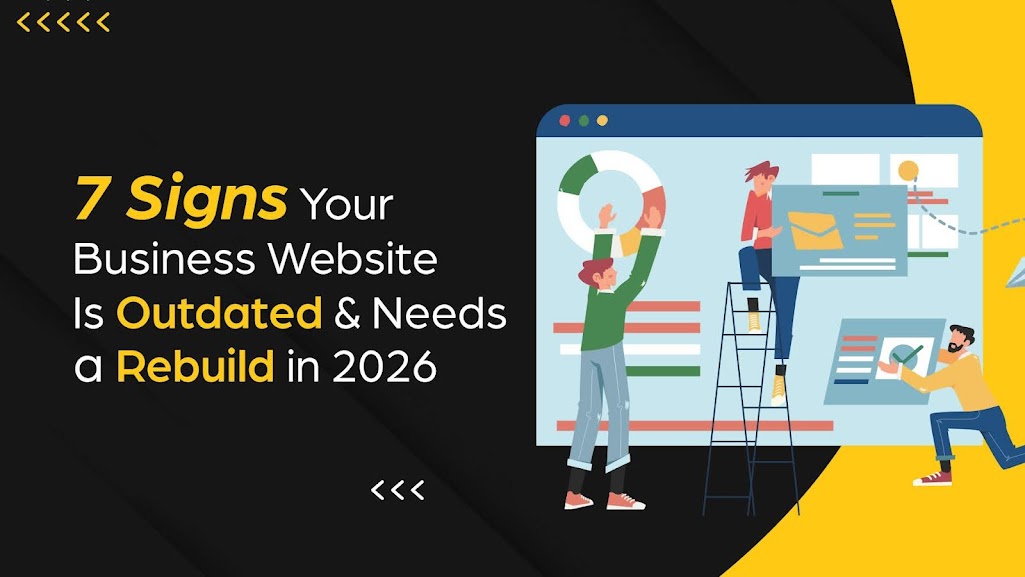
So how do you actually know when it’s time for a website rebuild rather than just a quick patch-up? In this blog, we walk you through 7 clear, specific signs that your business website is outdated and genuinely needs a rebuild in 2026.
This is not a list of vanity metrics. They are tangible signals directly affecting your conversions, your SEO rankings, and customers’ perceptions of your brand.
Sign 1: Your Website Has Slow Page Load Speeds

Page speed isn’t only a technical metric. It’s a user experience signal and a direct ranking factor for Google. If your site takes more than three seconds to load on a mobile device, you are almost certainly losing visitors before they even see your content.
Why slow speed is more damaging than most businesses realize
Research consistently shows that as page load time climbs from one second to ten seconds, the likelihood of a user bouncing increases by up to 123%. A two-second delay alone can push bounce rates up by more than 100%. These aren’t small numbers. And slow loading is often a symptom of deeper issues, including bloated legacy code, oversized images, old hosting infrastructure, or plugins that were added over the years without ever being cleaned up.
If your current site scores poorly on Google PageSpeed Insights or your Core Web Vitals are in the red, a surface-level fix usually won’t be enough. These are structural issues that often require a website rebuild rather than a patch.
Quick check:
Run your site through PageSpeed Insights or GTmetrix right now. If your mobile score is below 50, take that seriously.
Sign 2: Your Website Is Not Fully Optimised for Mobile Devices

More than 62% to 64% of all global web traffic now comes from mobile devices. Despite this, a surprising number of business websites still aren’t properly optimized for smaller screens. We’re not just talking about pages that technically display on a phone. We’re talking about layouts that require zooming in to read, buttons that are too small to tap, and navigation that simply doesn’t work on a touchscreen.
Mobile-first is not optional in 2026
Google’s algorithm now indexes the mobile version of your site first. If your mobile experience is poor, your desktop rankings suffer too. And beyond SEO, there’s the simple reality that your potential customers are browsing on their phones. When they land on a site that feels broken, they leave, often for a competitor whose website design services in Chandigarh or elsewhere have kept up with modern standards.
A proper website redesign in 2026 means building mobile-first from the ground up. Not just adding responsive CSS to an old template, but genuinely rethinking layout, navigation, and content hierarchy for how people actually browse on a phone.
- Pinch-to-zoom is required to read content
- Navigation menus collapse into unusable dropdowns on mobile
- Forms are difficult or impossible to fill out on a phone
- Images overflow their containers or appear distorted
If any of these describe your site, mobile responsiveness should be a central priority in your rebuild brief.
Sign 3: Your Bounce Rate Is Consistently High
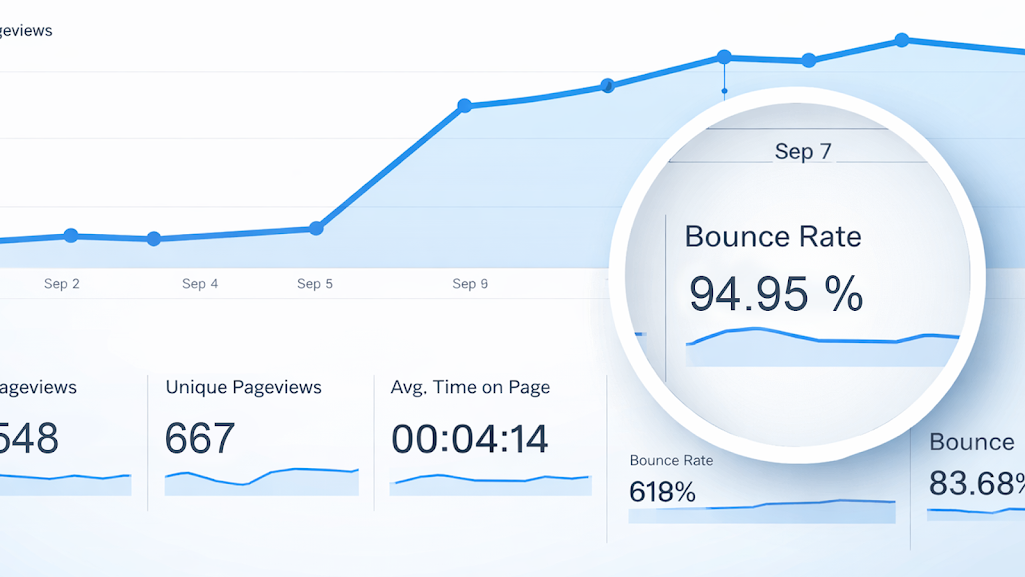
A high bounce rate means visitors are landing on your site and leaving without clicking anywhere else. While context matters (a blog post bounce is different from a product page bounce), if your core service pages are showing bounce rates above 70%, that’s a clear signal that something isn’t working.
Reading bounce rate as a UX symptom, not just a number
For service-based businesses, healthy bounce rates typically sit between 15% and 50%. B2B sites average around 30% to 55%. When you’re consistently above those benchmarks, it usually points to one or more of the following: unclear messaging on landing pages, a design that looks untrustworthy, slow load times, or content that simply doesn’t match what the visitor was searching for.
The problem with these issues is that they’re often baked into the original structure of the site. Trying to fix them with new images or updated copy doesn’t address the root problem. Often, the solution requires rethinking the page architecture entirely, which is precisely what a website rebuild allows you to do.
High bounce rates aren’t just a UX problem. They affect your ad spend efficiency, your SEO performance, and ultimately your bottom line.
Sign 4: Your SEO Rankings Are Declining or Failing to Improve

If your website used to rank decently on Google and has been quietly slipping over the past year, or if it simply never gained any organic traction, the site’s technical foundation is very likely part of the story.
Technical SEO issues are often invisible until it’s too late
Outdated websites accumulate SEO debt over time. Broken internal links, missing or duplicate meta tags, poor URL structures, no schema markup, missing XML sitemaps, and pages that block crawlers all add up. Google’s crawl budget is finite, and if your site is making the bot’s job harder, you pay for it in rankings.
There’s also the issue of Core Web Vitals, which became an official Google ranking factor a few years back and continues to be refined. Sites that fail LCP, FID, or CLS benchmarks are at a structural disadvantage, especially in competitive local markets like web development services in Mohali, where regional competitors are actively investing in their digital presence.
A website redesign gives you the opportunity to build a clean SEO architecture from day one, rather than spending months trying to fix a foundation that was never solid.
- Broken links across key service pages
- Missing or identical meta descriptions across multiple pages
- No structured data or schema markup
- Pages with thin or duplicate content that dilute the domain authority
- No internal linking strategy is built into the site structure
Sign 5: Your Website Design Feels Outdated
This one is harder to admit, but it matters a lot. Visual design communicates trust before a single word is read. Studies have shown that users form a first impression of a website in less than 50 milliseconds. If your site still has the hallmarks of design from 2017 or earlier, such as crowded layouts, stock photo overload, carousel sliders, excessive drop shadows, or outdated typography, people will question your credibility before they even read what you offer.
Design isn’t vanity; it’s conversion infrastructure
Modern website designing firms in Mohali practice in 2026 emphasize clean layouts with intentional white space, clear typographic hierarchy, high-quality visuals that feel human rather than generic, and design systems that stay consistent across every page. These aren’t aesthetic preferences. They’re conversion factors.
The difference between a website that converts and one that doesn’t is often not the product or the price. It’s whether the design makes the visitor feel like they’re in the right place. If your design feels dated, it quietly communicates that your business might be dated too.
Some specific design red flags to look for in 2026:
- Abundant auto-playing sliders or carousels on the homepage
- Generic stock photos that look identical to every other business site
- Text that’s difficult to read due to low contrast or poor font choices
- Cluttered navigation with too many top-level menu items
- No visual hierarchy guides the user toward a CTA
Sign 6: Your Website Is Difficult to Update or Manage
This one might feel like a convenience issue, but it goes deeper than that. If you need to raise a ticket and wait for a developer when all that needs doing is changing some text, updating a team member’s photo, or adding an ‘our services’ page, your website is fighting against your business processes instead of facilitating them.
A rigid CMS is a growth bottleneck
Many outdated or poorly built websites rely on legacy CMS platforms or custom-coded systems that simply don’t support the flexibility necessary for modern-day businesses. As your offerings change, so should your website, with similar changes. If it can’t, content gets stale fast, and outdated information erodes customer trust more effectively than almost anything else.
One of the key goals of website development companies in Mohali is to develop projects by building on platforms that give business owners genuine editorial control, whether that’s a well-structured WordPress build, a headless CMS setup, or a Webflow deployment designed for non-technical users.
Beyond editorial control, there’s also the security angle. Older CMS versions and unmaintained plugins are a real vulnerability. If your site hasn’t had its software stack updated in over a year, you’re running a real security risk.
A website you can’t easily update is a website that gets outdated fast. Content freshness matters for both users and search engines.
Sign 7: Your Website Isn’t Generating Leads or Conversions
This is the most important sign of all. At the end of the day, your business website isn’t a digital brochure. It’s supposed to work for you: generating inquiries, capturing leads, building trust, and moving visitors toward a decision.
When your website becomes a silent liability
If you genuinely cannot remember the last time a lead came in through your website, or if your contact form submissions have dried up, or if your product pages get traffic but your sales aren’t reflecting it, then your website has a conversion problem. That problem rarely lives in one place. It’s typically a mix of unclear calls-to-action, lack of trust signals, confusing navigation, or weak value propositions, plus a user flow that was never designed intentionally.
That means a good website rebuild solves all of this in one go. It begins with understanding what a user wants to do and planning the structure and content to make that journey as smooth, compelling, and rewarding as possible. That’s the difference between a website redesign done right and just slapping some fresh paint on old problems.
If your website isn’t earning its place in your business, it’s time to rebuild it into something that does.
Website Rebuild Cost: What Should You Actually Budget in 2026?
One of the first questions businesses ask when they start thinking about a website rebuild is, “How much is this going to cost?” The honest answer is that it depends, but here’s a real breakdown based on current market data so you can budget with clarity rather than anxiety.
| Website Type | Estimated Cost (USD) | Timeline | Best For |
|---|---|---|---|
| Small Business Site (5-15 pages) | $3,000 – $15,000 | 4-8 weeks | Local services, consultants, startups |
| Mid-Size Business Site (20-50 pages) | $15,000 – $50,000 | 2-4 months | Growing brands, lead-gen focused businesses |
| eCommerce Rebuild | $20,000 – $80,000+ | 3-6 months | Online stores, product-heavy businesses |
| Enterprise / Platform | $80,000 – $200,000+ | 6-12 months | Large corporations, SaaS, high-traffic platforms |
| Visual Refresh Only | $2,000 – $10,000 | 3-6 weeks | Sites with good structure but dated appearance |
| Platform Migration | $15,000 – $80,000 | 4-9 months | CMS overhaul: legacy to modern stack |
Remember that these are rough ranges. A website development agency in Mohali or a web-designing firm in Mohali working within India will usually have significantly better rates for the same quality, sometimes up to 30-60% cheaper than that of US/UK agencies. That’s a real advantage for businesses working with international teams.
How to Rebuild a Website: A Practical Starting Point
Knowing you need a rebuild is one thing. Knowing how to actually do it without losing your existing SEO, breaking customer trust, or running massively over budget is another. Here’s a grounded approach to how to rebuild a website in 2026.
Step 1: Audit what you have
Before you tear anything down, understand what’s actually working. Which pages get traffic? Which gets conversions? What content should be preserved and what should be retired? This prevents you from accidentally discarding things that are quietly doing their job.
Step 2: Define clear goals
A rebuild without specific goals turns into an expensive aesthetic exercise. Are you trying to improve lead generation? Reduce bounce rate? Rank better for specific keywords? Improve mobile UX? Your goals should drive every decision in the rebuild.
Step 3: Choose the right platform
The choice of website rebuild software matters more than most people realize. WordPress remains the most flexible option for most businesses, especially when paired with a headless or block-based architecture. Shopify is the sensible choice for e-commerce. Webflow is increasingly popular for marketing sites that need design flexibility with good editorial control. The platform you choose should serve your business for the next four to five years at a minimum.
Step 4: Protect your SEO during the migration
This is where a lot of rebuilds go wrong. Set up proper 301 redirects for every URL that’s changing. Preserve your existing meta structure where it’s working. Don’t launch without confirming crawlability in Google Search Console.
Step 5: Partner with the right team
Whether you are partnering with a website design service provider in Chandigarh or interacting with an agency based out of your geographical scope, look for partners who first want to know about your business goals before they jump into the design aspects. A good rebuild partner leads with strategy, not just aesthetics.
Rebuilding a website without protecting your existing SEO is one of the most common and costly mistakes businesses make. Always plan the migration alongside the design.
Finding the Right Website Development Company
Choosing the best website designing company in Chandigarh for your next project is not just about hiring someone to design pages. It’s about working with a team that understands how digital platforms support real business goals.
Many companies evaluate agencies based on design portfolios alone, but the most effective partners focus on strategy, functionality, and long-term performance as well.
For example, companies like 42Works, which have worked on projects across India, the USA, the UK, and other markets, demonstrate how experience across different industries can shape stronger digital solutions. However, what generally matters more than numbers is the approach a development partner follows. Strong digital teams usually stand out because they:
- Start with strategy, not just design
Before jumping into layouts or wireframes, they try to understand the business itself by asking questions like:
- Who is the target audience?
- What actions should visitors take on the website?
- What does success look like in the coming months?
- Focus on outcomes, not just visuals
A website should support business growth, whether that means generating leads, improving engagement, or strengthening brand credibility.
- Offer integrated digital capabilities
Working with a team that can handle multiple aspects of a digital project often creates smoother execution. Many full-service providers, including firms such as 42Works, typically cover areas like:
- Website design and development
- Mobile application development
- Digital marketing and performance optimisation
- Ongoing maintenance and technical support
- Build scalable digital platforms
The right partner designs solutions that can evolve as the business grows, rather than requiring a rebuild every time requirements change.
Ultimately, the goal is to collaborate with a firm whose website design services in Chandigarh balances technical expertise with strategic thinking, ensuring the website is not only visually appealing but also effective in delivering measurable results.
Final Thoughts
Your website is often the first real interaction a potential customer has with your business. And in 2026, first impressions happen fast and get forgotten even faster. A site that’s slow, outdated, hard to navigate, or simply not generating results isn’t just an inconvenience. It’s a business problem worth taking seriously.
The good news is that a well-planned website rebuild is not a cost. It’s an investment with a measurable return. Faster load times mean lower bounce rates. Better mobile experience means more conversions from the majority of your traffic. Clean SEO architecture means better rankings without spending more on ads. A site that actually communicates your value means visitors trust you faster.
If several of the signs in this article feel familiar, that’s your signal. Not to panic, but to act. Start with an audit, get clear on your goals, and find a team that understands your business before they start designing your website.
If you’re looking for a website designing company in Mohali that brings real strategic thinking to the table, 42Works is worth a conversation.
Articles Worth Reading
- Website Redesign Guide: Why, When & How to Start
- Website Development Trends Transforming 2026
- 7 Signs It’s Time for a Website Redesign in 2026 – Brain Buzz Marketing
FAQs
1. How do I know if I need a full website rebuild or just a refresh?
If your site has structural problems like poor mobile experience, bad SEO foundations, or a CMS you can’t manage, a full rebuild usually makes more sense than patching. A refresh works when the structure is sound, but the visuals are dated. If you’re unsure, run a technical audit first.
2. How long does a website rebuild typically take in 2026?
A small business site usually takes 4-8 weeks. Mid-sized business sites run 2-4 months. Enterprise or eCommerce rebuilds can take 6-12 months, depending on complexity. Planning and content preparation add time that most people underestimate.
3. Will a website rebuild hurt my Google rankings?
It can if handled poorly. The most common mistake is not setting up 301 redirects when URLs change. A well-managed rebuild with proper SEO migration will protect your existing rankings and often improve them significantly within a few months.
4. What is the average website rebuild cost for a small business?
For a small business site (5-15 pages), expect to budget $3,000 to $15,000 with a professional agency. In India, working with a quality website development company in Mohali or Chandigarh, you can often achieve comparable quality at a 30-60% lower cost.
5. What website rebuild software should I use in 2026?
WordPress remains the most versatile choice for most businesses, especially with block-based themes or a headless setup. Webflow is excellent for marketing sites. Shopify is the clear winner for e-commerce. The best platform depends on your specific needs, not on what’s trending.
6. How do I contact 42Works for a website rebuild or redesign?
You can reach the 42Works team directly by emailing contact@42works.net or calling +91-9517770042. We offer an initial consultation to understand your goals before recommending a specific approach.
7. How do I rebuild my website without losing my existing content?
Start with a full content audit to identify what’s worth keeping. Export your existing content before any work begins. A good development team will migrate your content systematically and test every page before anything goes live.
8. Is it worth rebuilding a website if I already have decent traffic?
Especially yes. Traffic without conversions means your site is attracting people but not converting them. A rebuild focused on UX and conversion optimization can turn existing traffic into actual leads and revenue. Don’t let good traffic go to waste on a poor experience.
9. What is the difference between a website rebuild and a website redesign?
A redesign primarily updates the visual design and possibly content while keeping the underlying structure. A rebuild starts from scratch with a new architecture, often a new CMS, a new page structure, and new code. Rebuilds are more comprehensive and address deeper technical problems.
10. How do I choose the right website designing company in Mohali or Chandigarh?
Look for a portfolio that includes projects similar to yours. Ask how they approach SEO during a redesign. Check reviews on platforms like Clutch or GoodFirms. Most importantly, choose a team that asks about your business goals before discussing design.
11. Can I rebuild my website myself using website builders like Wix or Squarespace?
For very small businesses with simple needs, yes. But DIY site builders have real limitations around custom functionality, SEO control, scalability, and performance. If your website is a serious revenue driver, investing in a professional rebuild almost always delivers better ROI.
12. What happens to my SEO if I switch CMS platforms during a rebuild?
If handled correctly, a platform migration doesn’t have to hurt your SEO. The key steps are preserving URL structures where possible, setting up 301 redirects for everything that changes, migrating your existing metadata, and resubmitting your sitemap in Google Search Console after launch.
13. How often should a business website be rebuilt or redesigned?
A full rebuild is typically needed every 3-5 years. A visual refresh or partial redesign can extend that cycle. The real trigger should be performance, not time: if your site is underperforming against measurable goals, act. Don’t wait for an arbitrary anniversary.
14. What features should a rebuilt business website include in 2026?
At minimum: mobile-first responsive design; fast load times (sub-3-second target); clear conversion pathways; accessible design meeting WCAG 2.2 AA; clean on-page SEO architecture, schema markup, SSL security, and an editorial-friendly CMS. For e-commerce, add payment gateway integrations and a smooth checkout flow.
15. What are the hidden costs in a website rebuild project?
Common hidden costs include professional copywriting ($100-$300 per page), premium stock photography, plugin or SaaS tool subscriptions ($200-$1,000/year), SEO migration specialist fees, and post-launch maintenance (typically 15-20% of the build cost annually). Ask your agency to include these in the initial estimate so you’re not surprised later.